Services
SERVICES
SOLUTIONS
TECHNOLOGIES
Industries
Insights
TRENDING TOPICS
INDUSTRY-RELATED TOPICS
OUR EXPERTS

September 10, 2026

Virtual shopping assistants are conversational AI solutions offering personalized product advice and 24/7 customer support. By accelerating service request resolution and tailoring product recommendations to customer needs, they help retailers boost conversion rates and retention.
With recent advances in artificial intelligence, particularly the emergence of generative AI, the operational scope of virtual assistants in retail and ecommerce has rapidly expanded, enabling more convenient and realistic user interactions across the entire customer journey.
Modern conversational AI solutions can easily handle complex interactions, capturing user intent and understanding the tone of a user’s message to provide relevant responses, facilitating conversational commerce. This makes them useful in a variety of pre- and post-purchase scenarios.
AI assistants use large language models (LLMs) and ML-based recommendation engines to replicate a human salesperson’s guidance, blending the convenience of online shopping with personalized in-store service. To achieve this, personal shopping assistants can ask follow-up questions to better understand customer needs, combine this information with product data and the customer’s browsing history or past purchases, and recommend products that the shopper will most likely purchase.
When a customer adds an item to their cart, the AI-powered shopping assistant can suggest complementary products or premium upgrades, anticipating customer needs in real-time to increase the average order value. For example, if the customer was recently interested in travel accessories and has just added standard Bluetooth headphones to their cart, the assistant can suggest a more expensive noise-canceling model and highlight that it offers a better listening experience while traveling.
According to recent statistics, approximately 7 out of 10 online shopping carts are abandoned. To combat high abandonment rates, AI assistants proactively engage shoppers who leave items behind to recover sales that would otherwise be lost. For this, the assistant first estimates potential abandonment reasons and anticipates the most effective incentives based on the customer’s current cart and past behavior and interactions. Then, it can reach out to the customer at the right moment to address potential objections (such as clarifying shipping costs and providing alternative shipping options), make unique offers like personalized discounts or free shipping to motivate them to complete the transaction, or suggest cheaper deals for items with comparable features.
Increasing digital transaction volumes, coupled with a need for personalized 24/7 support availability and increasing labor costs, are putting a strain on retail companies’ customer support operations. That’s why many retail businesses are now complementing their customer support staff with AI chatbots and virtual assistants to handle service cases around the clock and efficiently resolve customer queries. These solutions are now increasingly applied to provide information on specific products or physical store working hours, facilitate order tracking, and assist with user password resets, shopping list management, product returns and exchanges, and other operations.
Current statistics on virtual shopping assistants demonstrate that AI-powered solutions are being actively adopted by modern retail companies, with more and more customers turning to AI assistants at every stage of their purchase journey, from product discovery to checkout and beyond.
| The virtual shopping assistant market is estimated to be valued at $1.47 billion in 2026 and is projected to reach $10.87 billion by 2033, growing at a CAGR of 33.1% | |
|---|---|
| Retail and ecommerce represent the leading sector in the global conversational AI market, which includes virtual assistants and AI chatbots, with a share of 21% | |
| Agentic commerce is expected to drive up to $1 trillion in the US B2C retail revenue by 2030 |
| 48% of Millennials and almost 60% of Gen Z consumers surveyed in 2025 reported using AI shopping assistants or ChatGPT to facilitate their online purchases | |
|---|---|
| 52% of consumers use virtual assistants that automate re-ordering or meal planning at least once a week | |
| 31% of US consumers are willing to allow AI to narrow product choices for household supplies purchases, and 28% are willing to do so for personal electronics purchases | |
| At least 70% of consumers are forecasted to begin their customer service interactions using conversational AI solutions by 2028 |
Scheme title: American customers' use of AI in secondhand shopping in 2026
Data source: Statista
| When buying online, 77% of consumers worldwide want retailers to provide virtual try-on capabilities, and 76% desire AI-powered online shopping assistants | |
|---|---|
| More than 60% of consumers recognize the value of AI in providing product recommendations | |
| A total of 62.7% of respondents in the United States are at least somewhat comfortable with the use of AI for grocery shopping suggestions | |
| AI referrals convert at 31% higher rates than other traffic sources, with consumers landing on retail sites from generative AI assistants being 33% less likely to leave immediately | |
| 37% of AI-assisted shoppers purchase more goods per order, and 39% try new brands they would not have thought of |
Retailers and ecommerce companies can choose from a variety of virtual shopping assistants on the market today and use them to handle diverse tasks, from providing personalized product recommendations to shoppers to streamlining order management. Here are the top examples of virtual shopping assistants that help retailers improve customer service and reduce staff workload.
A US-based online household goods store teamed up with Itransition to build a virtual shopping consultant providing users with personalized product recommendations. The GenAI-powered solution can adjust suggestions based on real-time product availability and assist with checkout operations. After its implementation, the company achieved a 50% reduction in overall manpower effort for resolving customer queries.
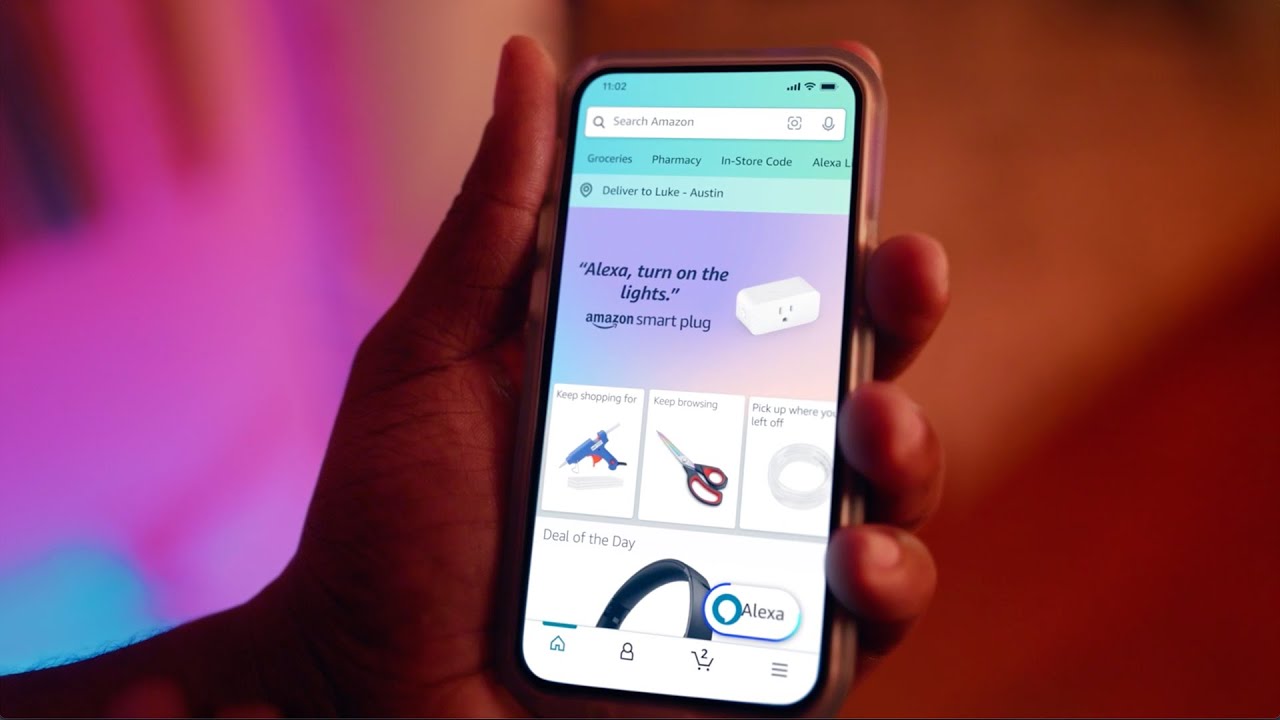
Alexa Voice Shopping is a feature that enables users to make purchases on the Amazon ecommerce platform using voice commands through Alexa-enabled devices, such as Amazon Echo. Shoppers can ask Alexa to search for specific products, provide personalized suggestions, add items to their shopping list and cart, check out, and track their orders.
Agentforce is an agentic AI platform built into Salesforce that enables retailers to set up and deploy autonomous AI agents across a variety of business functions. Within their broad scope, these tools can also serve as virtual shopping assistants, helping customers explore new products, check order history, reorder the same items, and monitor order status.

Sparky is a GenAI-powered virtual assistant recently integrated into the Walmart mobile app and designed to enhance the online shopping experience. Walmart’s AI assistant can provide personalized recommendations, summarize product reviews, and compare purchasing options to help users make more informed decisions, as well as facilitating procedures such as reordering or service booking.
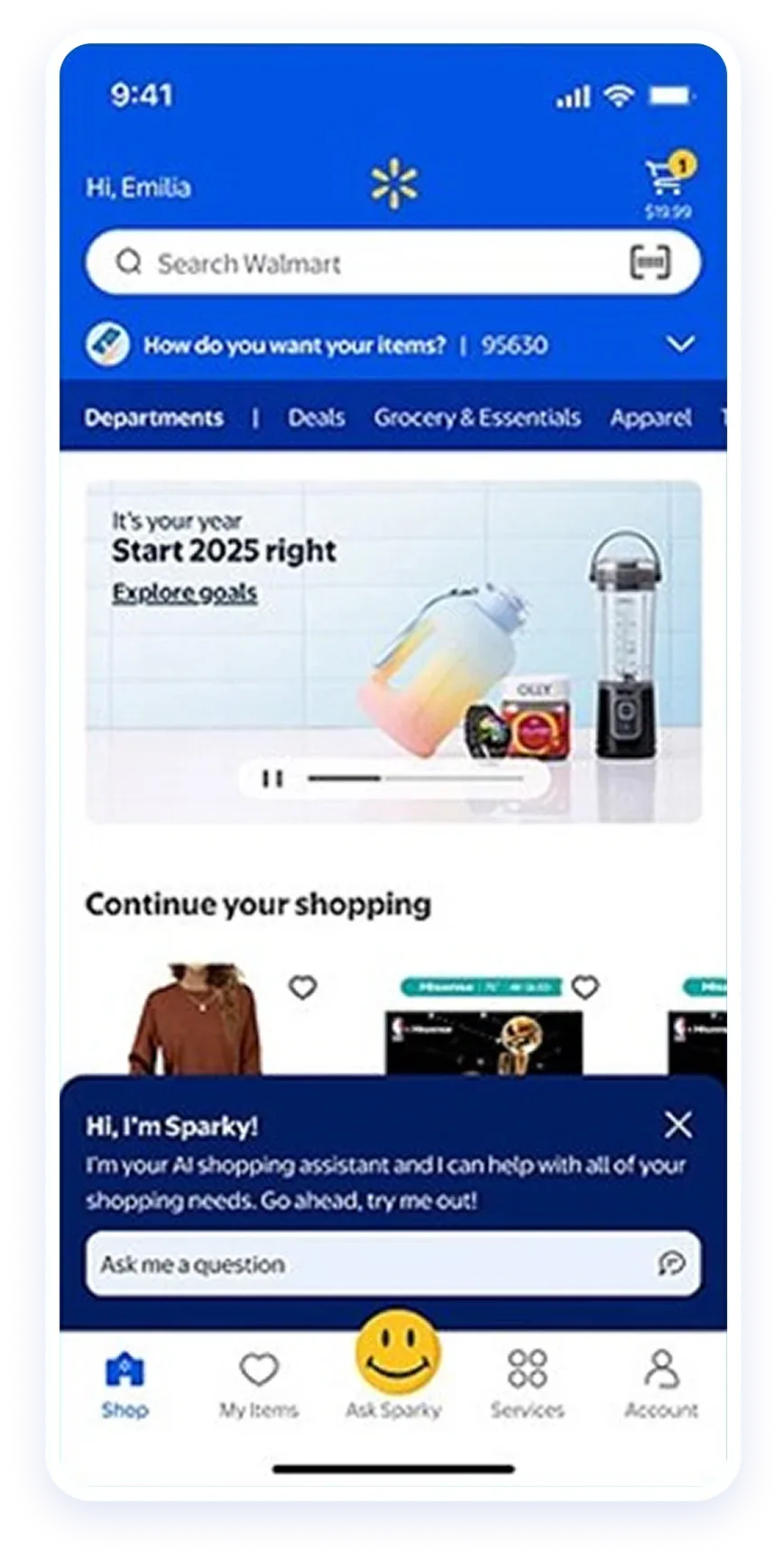
Image title: Sparky’s user interface
Image source: Walmart
Virtual shopping assistants provide diverse benefits to retail and ecommerce companies, helping them stay current in the modern market, meet rising customer expectations, and handle increasing operational costs, while enhancing customer satisfaction.
Customers can get immediate assistance anytime thanks to virtual assistants operating outside of business hours.
Dynamic conversations with virtual assistants make the shopping journey more interactive and enticing.
AI assistants analyze user data and interactions to offer relevant product recommendations based on customer needs.
Through the automation of routine tasks like returns management or cart recovery, virtual assistants help mitigate customer service workload and cut operational costs.
Virtual assistants encourage purchases and help reduce cart abandonment via personalization, boosting sales and average order value.
Businesses can extract actionable insights from each interaction between AI assistants and users to refine their strategies for assortment, replenishment, and other key retail aspects.
Unlike human agents, virtual assistants can handle multiple customer queries at once, especially during peak seasons.
Guided by a virtual shopping assistant, customers make more informed decisions, buying products that truly meet their expectations.
Virtual shopping assistants, while beneficial in many ways, can be challenging to implement, so retailers should know how to mitigate potential implementation hurdles in advance, achieving smooth solution adoption and operation.
Issue | Recommendations | |
|---|---|---|
Risk of inaccuracies |
Virtual shopping assistants are valuable tools as long as they provide users with accurate and relevant
information. If an assistant recommends out-of-stock items or irrelevant products, customer trust and
conversion rates will decline.
|
|
Cumbersome interactions |
While inaccurate responses certainly annoy users, there are many other factors that can ruin the user
experience and lead to abandonment, including excessively long conversation flows.
|
|
Data privacy & security concerns |
AI systems’ need to process large volumes of data, including personal information, can raise concerns
among both the public and regulatory agencies about how such data is collected and handled, as well as
drawing the attention of hackers and fraudsters.
|
|
Itransition provides an extensive range of AI services and solutions to help retailers engage their audience and scale their business operations.

Our specialists build chatbots, virtual assistants, AI agents, and many other artificial intelligence solutions that combine top performance with strict regulatory compliance, taking care of front-end and back-end development, software integration, QA and testing, and post-launch support.
We provide expert advisory across each step of the artificial intelligence implementation lifecycle, assisting your company with project planning and supervision, software design, and user adoption to maximize the value of your AI solution.

With the exponential rise of ecommerce, retailers seek innovative ways to enhance shopping experiences, implementing solutions from augmented reality and mixed reality-driven websites to chatbots and conversational AI systems. While rule-based chatbots frequently fail to mimic human-like behavior, AI-powered virtual shopping assistants are posed to bridge this gap. Capable of understanding user intent and dialog context, they offer realistic interactions and instant support around the clock to thousands of customers.
For companies looking to advance their retail strategy by implementing a conversational AI solution, Itransition offers its strategic guidance and proven delivery capabilities.
Most modern solutions leverage generative AI and large language models like OpenAI’s GPT-4 or Google’s Gemini, along with machine learning and natural language processing (NLP), to understand human language and respond to customer inquiries. Voice assistants are built on core NLP technologies, including speech recognition and synthesis, to support spoken language interactions.
Reflecting current trends in conversational AI, AI chatbots typically focus on tasks such as question answering or handling simple queries, whereas virtual shopping assistants can handle more complex tasks, such as assisting users with product orders and related transactions. However, the boundary between these categories is getting more and more blurred over time, due to the rise of GenAI and its incorporation into both virtual assistants and bots. Modern virtual assistants can predict user needs based on past searches, broader market context, and weather forecasts and, when integrated with virtual reality solutions for retail, facilitate virtual tours of the store or product.
The choice mostly depends on your business scenario. Custom assistants are a great option for businesses
requiring tailored functionality and full control over data management and security. However, this comes with
higher upfront costs and a potentially lengthy development process, especially for training AI models.
Building virtual shopping assistants on top of AI platforms from leading cloud providers, such as
Azure Assistant and Amazon Q, can be a better option for companies looking to minimize initial investment and
speed up deployment. Furthermore, these platforms provide artificial intelligence algorithms and models
optimized for maximum performance, along with a robust cloud infrastructure to make your solution more
scalable.
A custom virtual assistant development project typically comprises the following key steps:

Insights
Discover top applications, real-life examples, and key trends of machine learning in ecommerce, along with some best practices to streamline its adoption.

Service
Itransition delivers reliable, secure, and highly scalable AI agents to streamline complex business processes and assist your audience across all channels.

Insights
Discover key capabilities, integrations, and benefits of ecommerce CRM software, along with the best CRM platforms for this industry and selection tips.

Insights
Explore key applications, real-world examples, and benefits of machine learning in retail, along with best practices to facilitate its implementation.

Case study
Learn how Itransition delivered retail BI and deployed an ML-based customer analytics solution now processing 10TB of data.

Insights
Explore how virtual stores bridge the gap between online and in-store shopping, helping retailers better engage with customers through immersive experiences.